


More than 75 to 96 percent of maritime incidents are linked to human error, and many of those involve failures in navigation systems or missed radar targets. In high-traffic sea lanes, even a small delay in response can result in serious consequences. That is why modern vessels now depend on more than just basic radar—they rely on advanced tools that support fast decision-making and smooth coordination across all systems on board.
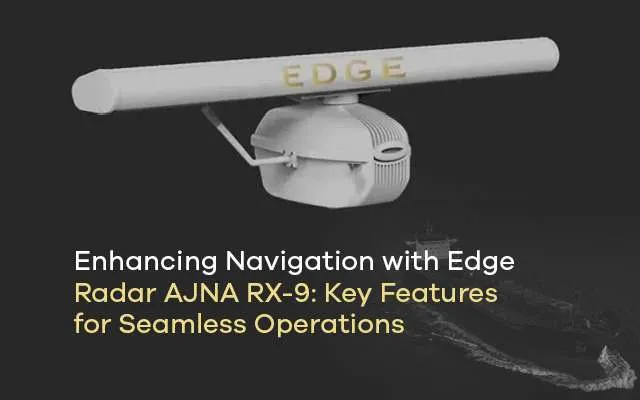
The Edge Radar AJNA RX-9 answers that call with precision. It is part of a new generation of maritime radar technology built for real-world demands. Whether navigating through open waters, confined channels, or busy ports, this radar gives crews the visibility and control they need to move confidently and efficiently. With solid-state reliability, fast target tracking and a user interface designed for professionals, the AJNA RX-9 is built to support seamless operations every mile of the way.
For fleet managers, navigation officers, and technical engineers, understanding what sets the AJNA RX-9 apart is essential to staying ahead. This article explores the core strengths of the radar and why it is a standout addition to any vessel’s navigation system.
Overview of Edge Radar AJNA RX-9
The Edge Radar AJNA RX-9 is built for professionals who demand performance and clarity under strenuous conditions and pressure. It is manufactured with an emphasis on long-term dependability and user-focused design. This well-organized radar system delivers critical information with precision.
The AJNA RX-9 is designed with the modern bridge environment in mind. It supports IMO certification, solid-state radar functionality and flexible integration with a range of vessel navigation systems.
Let us now examine the key features that enable this radar to elevate maritime operations.
1. Advanced Target Detection: Clarity and Confidence in Every Condition
When it comes to safe navigation, advanced target detection is one of the most critical capabilities. The AJNA RX-9 features enhanced target separation and detection accuracy that enables precise object tracking across variable conditions. Even in rain or choppy seas, the radar can differentiate between small vessels, buoys and landmasses with clarity.
It uses digital signal processing to minimize clutter and sharpen returns. Operators can focus on meaningful targets without being overwhelmed by irrelevant data. This is especially valuable during high-traffic navigation or complex coastal approaches, where poor radar performance can lead to misjudged positions and delayed responses.
In addition, the system adapts in real-time to changing environmental feedback. It does not rely on fixed presets but adjusts processing based on range, sea state and movement. That means what the crew sees on-screen reflects reality in real-time, giving them the best chance to respond safely and efficiently.
2. User-Friendly Interface: A Better Way to View Critical Data
While technical ability is vital, usability often defines whether technology helps or hinders. The AJNA RX-9 provides a user-friendly radar experience, making advanced data easy to understand and act upon. Its display is clear, with simplified visuals that prioritize critical information without hiding key data behind layers of settings.
One of the most effective interface tools included in this radar is its Picture-in-Picture mode. This allows the crew to view two radar ranges at the same time on the same screen. For example, they can monitor long-range traffic movement while also keeping an eye on nearby threats in confined waters. It removes the need to toggle between views and reduces decision-making delays.
This interface is designed for professionals who need fast access to reliable input, not for casual or simplified use. With its high-contrast layout, fast load times and minimal menu depth, the AJNA RX-9 supports continuous monitoring with fewer distractions or misinterpretations.
3. Versatile Scanner Options: Tailored for Your Operational Needs
Another important feature of the AJNA RX-9 is its dual compatibility with solid-state and magnetron scanner options. This versatility means operators are not typically locked into a single scanner type. They are free to select the setup that matches their vessel profile and operational requirements.
- Solid-state scanners offer long life and low maintenance. They are ideal for vessels with frequent operations in harsh environments, where uptime and signal stability matter more than raw power.
- Magnetron-based scanners, on the other hand, offer higher peak power and may suit operators working in budget-sensitive operations or those needing specific radar beam characteristics for narrow detection goals.
This dual compatibility allows marine operators to tailor the radar configuration to performance targets without sacrificing system integrity. Whether retrofitting older vessels or outfitting new builds, the AJNA RX-9 offers the adaptability that many radar systems fail to deliver.
4. Seamless Integration: Built for Modern Vessel Networks
Maritime technology has moved beyond standalone devices. The AJNA RX-9 supports seamless integration with other key navigation and safety systems on the bridge. It connects easily to ECDIS, AIS, GMDSS terminals and even wireless monitoring dashboards.
This compatibility streamlines situational awareness. It lets teams cross-reference radar targets with AIS signals, route overlays and traffic separation schemes without needing separate devices. The radar does not precisely deliver radar data, it becomes part of the full navigational picture.
It also supports remote diagnostics and monitoring, so shore-based support teams can assess radar health and performance in real time. That reduces the risk of unplanned downtime and helps keep compliance documentation accurate and up to date.
Whether used on its own or as part of an integrated vessel navigation system, the AJNA RX-9 fits into today’s operational workflows without friction.
Enhancing Seamless Operations: The Radar’s Real-World Impact
When you combine all of these features: target clarity, user interface, scanner flexibility and integration, you get a radar that makes day-to-day navigation more efficient and dependable. In operations where timing, safety and precision matter, this can be the difference between a smooth transit and a critical delay.
The radar’s advanced processing reduces unnecessary alerts, helping crew stay focused on high-priority changes. Its responsive user interface shortens reaction time during sudden course alterations. Its quick-drying scanner domes and modular parts simplify maintenance planning.
Together, these enhancements support seamless operations not as a goal but as a routine result. The system adapts to how professionals actually use radar, rather than expecting the crew to adapt to the system. For commercial fleets and specialist vessels alike, this helps reduce risk, support compliance and protect crew and cargo throughout every phase of navigation.
Conclusion
The Edge Radar AJNA RX-9 stands out because it addresses real-world challenges with precision, flexibility and practical intelligence. It is not merely another radar system, it is a well-balanced navigation partner that supports better decisions through clearer vision, faster feedback and smarter design.
For those managing critical navigation tasks, from port entries to open-sea crossings, it adds confidence, compliance and coordination to each voyage. Its IMO certification, multi-range display modes, and radar tracking enhancements make it ideal for serious maritime operations.
Professionals looking for radar that matches the pace and complexity of today’s shipping environment will find that the AJNA RX-9 delivers both high performance and long-term reliability. For marine operators, engineers and shipbuilders seeking a radar system that improves situational awareness while reducing operational stress, this system deserves serious consideration.
To learn more about how the AJNA RX-9 can support your vessel’s mission profile, consult an authorized supplier or review the latest system specifications from Edge in Control.